
How much light you need, by task
Lumens, lux, and footcandles in plain terms, with standard targets for desk work.
Disclosure: We may earn a commission if you buy through links on this page. It does not change what we recommend. Affiliate Disclosure
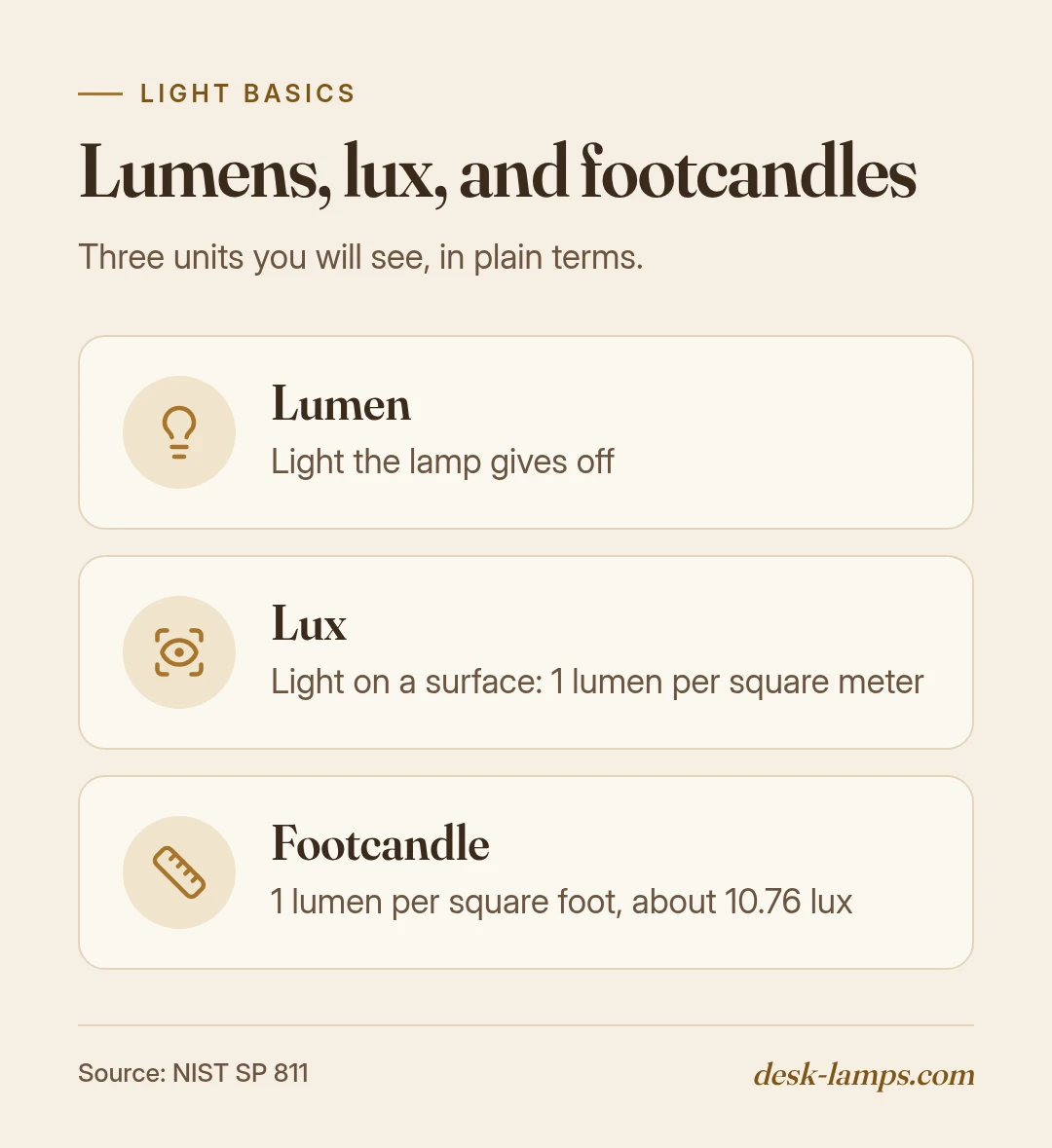
Lumens vs lux vs footcandles
- Lumens measure the light a lamp gives off.
- Lux measure the light landing on a surface. One lux is one lumen per square meter.
- Footcandles are the US equivalent: one lumen per square foot, about 10.76 lux.
Lamp boxes list lumens. Lighting guidance is usually in lux or footcandles.
Desk light targets by task
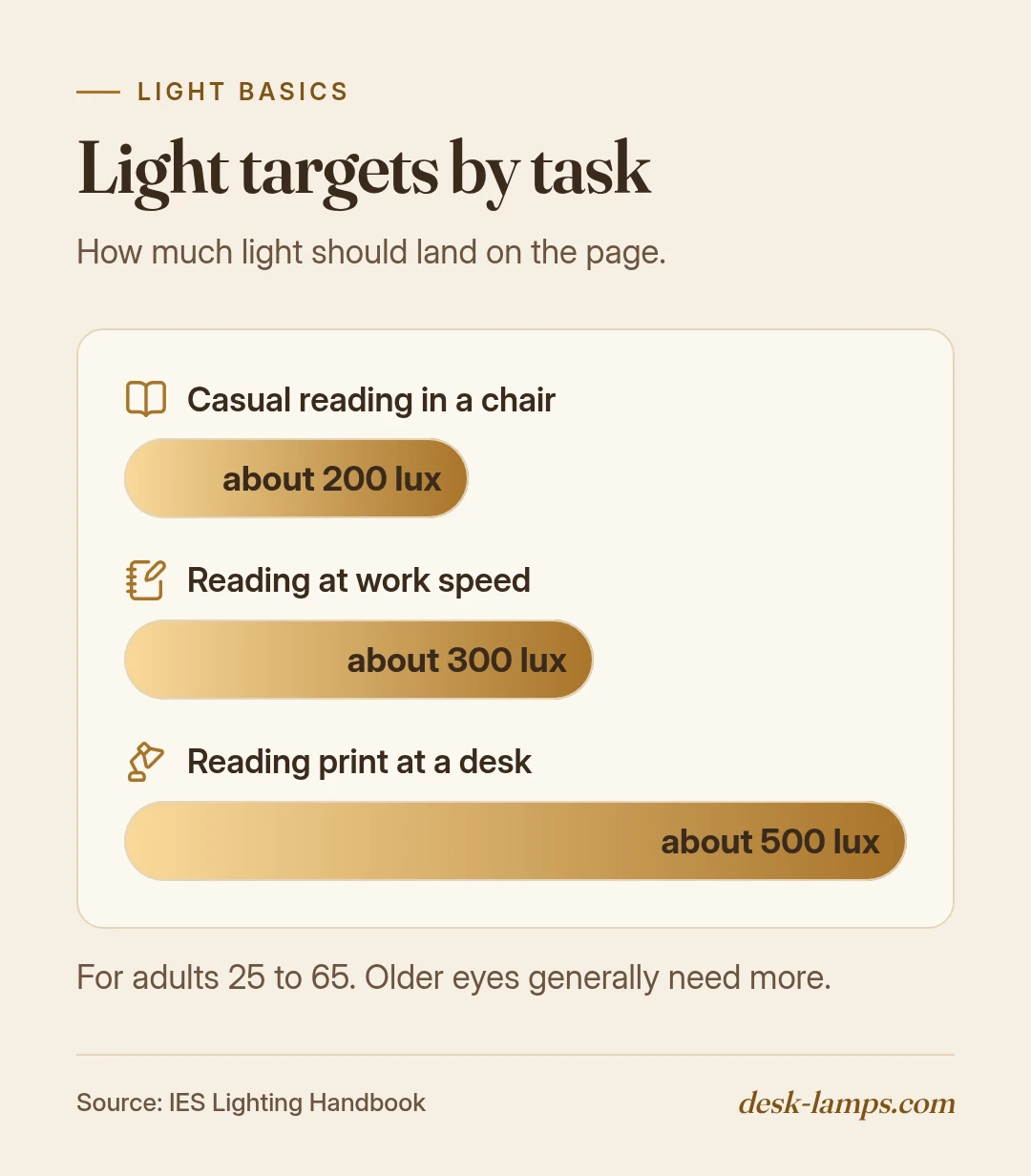
Guidance from the Illuminating Engineering Society, for adults 25 to 65:
- Casual reading in a chair: about 200 lux
- Reading at work speed: about 300 lux
- Reading print at a desk: about 500 lux
Older eyes generally need more light for the same task.
Why distance changes everything
The same lamp gives more lux the closer it is to the surface. That is why lumens alone do not tell you how bright your desk will be.
Ambient and task light add up
Room light and desk lamp light combine on the desk. A task lamp can bring your desk to the target without lighting the whole room that brightly.
Turning targets into a lamp choice
You do not need a light meter. Choose a lamp that can get bright enough, then dim it until print is easy to read without glare. For bulb brightness, see the lumens chart in our bulbs guide.
FAQ
General information, not medical advice. See an eye care professional about eye strain or vision concerns.
Related guides
Bulbs and color temperature | Task lighting and placement | Reading lamps
